Kalaripayattu is a very famous martial art form that’s noted for its high kicks, complicated stances and leaps. This martial art form makes use of your flexibility and through weapons training, you will become an expert in Kalaripayattu. This art form originated in Kerala in southern India and is among the oldest martial arts still practised. Weapons are a big part of the art form and once you master the basics you will move on to weapons training. Joining Kalaripayattu training would help you make a strong impression.
Why Weapons Are an Important Part of Traditional Kalaripayattu
Kalari was an important aspect in military training in Kerala and that is why weapons learning is important too. Learning how to practice these weapons would teach you something more than fighting – it teaches you timing, balance, wrist control or focus.
This martial art is taught in stages. Building flexibility is the first thing. Then you will learn how to use long sticks, followed by metal weapons, and finally unarmed techniques. Weapons training will not be a tough thing for the students because they go through the early stages mentioned above.
Different Types of Traditional Weapons Used
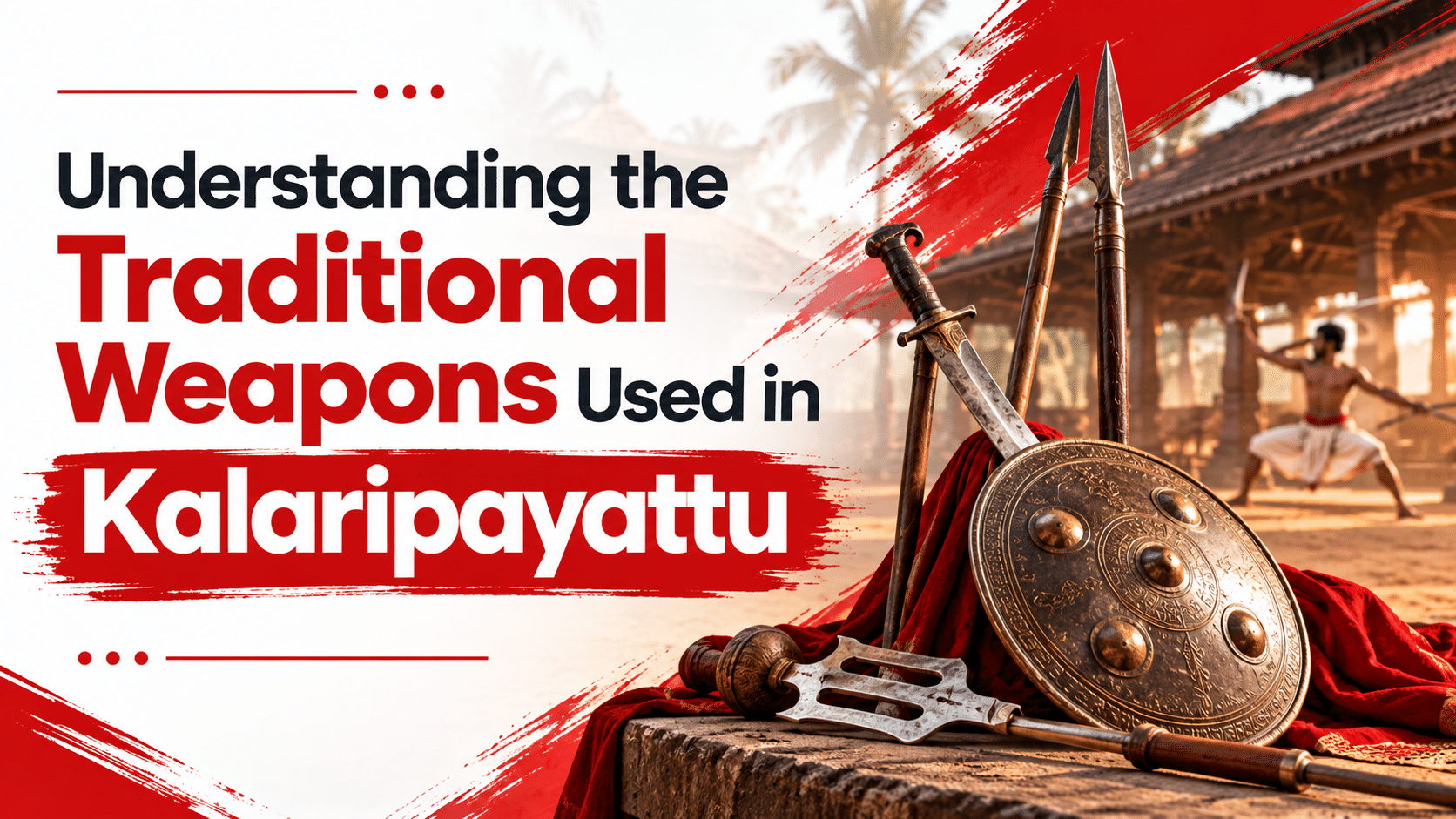
Kalari weapons fall into two broad groups. Wooden weapons come first. These include the long staff (kettukari), the short stick (muchan or cheruvadi) and the otta, a curved wooden stick. At Universal Martial Arts the following metal weapons are used:
- Dagger or kadara
- Sword and shield
- Spear or kuntham
- Urumi, a flexible sword.
Sword and Shield: Building Coordination, Timing, and Control
First, we will learn about how using the sword (val) and shield (paricha) holds a special place among Kalari weapons and how it will help with better balance and coordination.
Using the shield is then taught. The shield will be large enough to cover the chest.
Mastering both these would improve body and mind coordination. You will be taught how to use your hands, and this will be followed by your feet and body and show them correctly.
Kettukari and Long Staff: Understanding Staff-Based Techniques
The kettukari is a long wooden staff. Mastering this is an important step in Kalaripayattu training class since you have to think about how far the end of the stick reaches. It also builds grip and footwork, along with smooth turning of the hips and shoulders.
The shorter muchan (also called cheruvadi) is a small stick and one of the first weapons a student learns to use. It’s quicker to handle and teaches close-range control. Next, you will learn about the otta. Mastering this calls for precise movement because it is a curved wooden stick shaped almost like an elephant’s tusk.
Urumi: Exploring One of Kalaripayattu’s Most Distinctive Weapons
The urumi is the most distinctive weapon in Kalari. The urumi comes with a long, thin and flexible blade that whips and coils quickly. The experts wear it around the waist like a belt. When swung, it.
It’s also considered one of the hardest weapons to learn. The blade can hurt the person using it if control is lost, so schools that teach it usually reserve it for advanced students. A beginner shouldn’t expect to touch an urumi.
Short Weapons and Other Traditional Training Tools
Once you master the staffs and swords, you will learn how to use the kadara (a dagger), and the kuntham (a spear). Learning the dagger involves close movement and careful footwork.
How Students Progress From Unarmed Techniques to Weapon Training
A common four-stage path is:
- Meithari: body control, floor work and animal postures
- Kolthari: wooden weapons
- Ankathari: metal weapons
- Verumkai: unarmed combat
Once you master Kalaripayattu, you will become stronger, more flexible and more balanced. You will learn how to handle weapons more safely.
The Importance of Safety and Instructor Supervision During Weapons Training
Weapons training and practice is always done under the careful supervision of the instructor. A wooden stick may look harmless but careless usage can cause injury to you and the people around you, if used carelessly. And learning metal weapons makes it even more risky. Kalaripayattu training is always successful when it is done in small batches. This makes it easy for the instructor to teach students correctly so they can be safe and keep others safe.
How Traditional Weapon Training Is Adapted for Modern Kalaripayattu Classes
Even when you join the classes now, a good institute like ours keeps the traditional order and techniques. Our qualified instructors focus on skill, fitness and control. You will master the movements, the footwork and the discipline, with safety rules built in.
What Students Can Expect From Kalaripayattu Training At Universal Martial Arts
At Universal Martial Arts Academy, our kalaripayattu training academy in Dubai follows the four-level path above, starting with body control. First you will learn the basics and then move on to the weapons. Our classes are open to children, adults and women if they have basic fitness levels.
Weapons training at the academy begins first with wooden sticks and then swords, shields and knives. The classes are held in small batches!
Conclusion
Kalari is a skill to master, more than a fighting mode. It is a martial form that you must learn if you have the health and the time!