
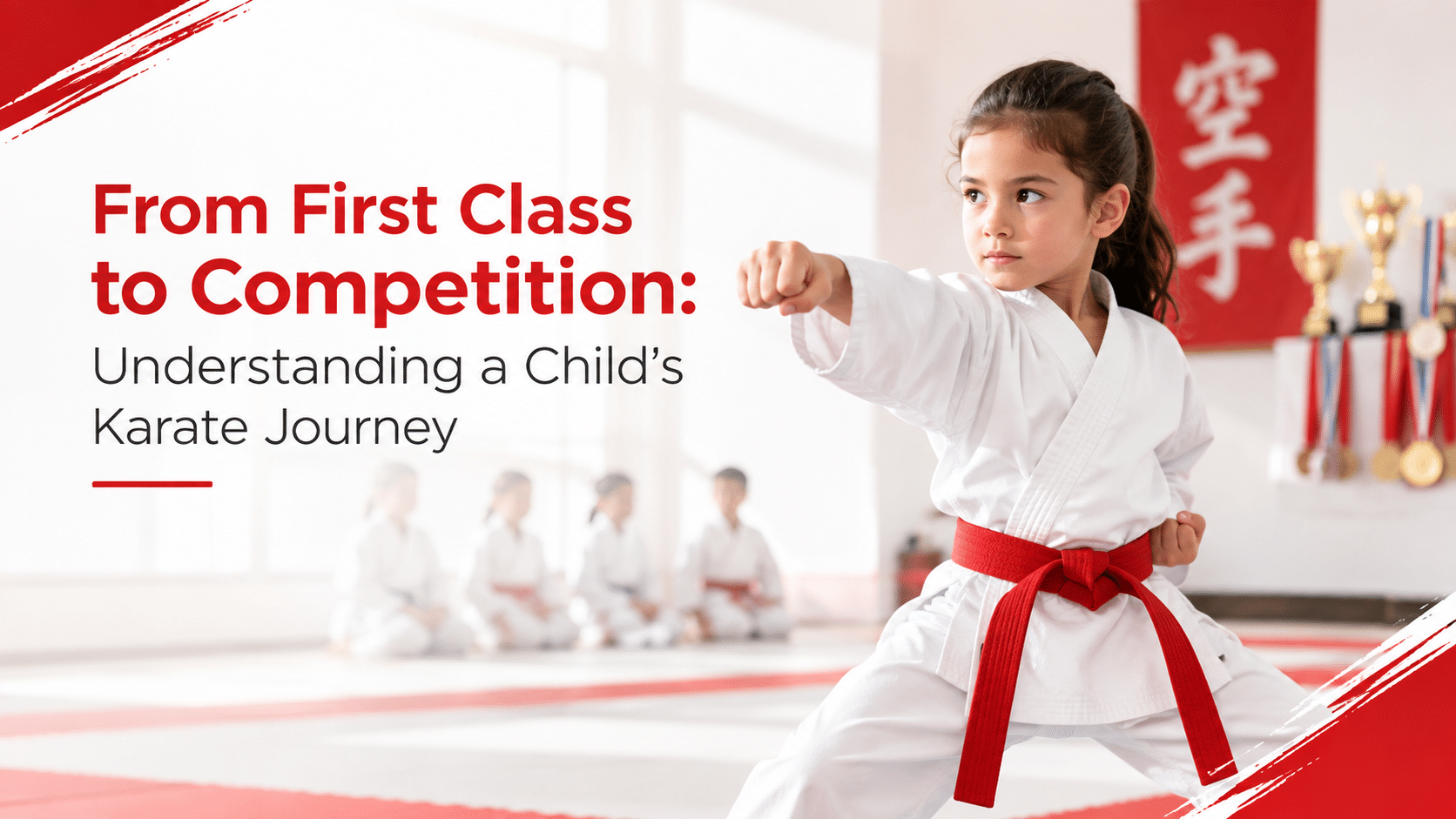
Joining a karate class can be a life-changing decision – for both the parent and the kid. Karate would teach your child a lot of things, including confidence and personal growth. However, while enrolling for karate is easy, it is important to know what actually happens over the next few years. That would help you monitor and track their growth. While it is important to enroll for the best karate classes it is important to know that your child is actually going somewhere with it, not stuck doing the same drills on repeat for a year. And that’s where enrolling in a credible school becomes important. In this blog by Universal Martial Arts, we explain what your child’s karate path would look like so you can see them grow and improve.
What Happens During a Child’s First Karate Class?
First sessions are mostly about basic movement, learning to follow instructions, standing in line and getting a feel for how a class actually runs. The instructor will size up a kid to see how he handles something new. If your child seems anxious and nervous, no problem, that’s normal and the instructor will take care of it.
Learning the Basics: Stance, Movement, Techniques, and Safety
Once your child becomes comfortable, the basic classes begin – stance work, basic footwork, simple strikes and blocks, etc. The child will be instructed on how to practice the techniques safely too. The instructor will take it slow so the child follows according to their skill and understanding of movement. Nothing is forced or rushed.
How Children Progress Through Different Stages of Karate Training
There are different stages in karate training and your child will pick it up according to their pace. Some master footwork in a week and some do it in a couple of months. The same child may take months to feel okay sparring. At Universal Martial Arts, we build early training around general coordination and discipline. The complex stages will happen only when the child is ready, especially since pace can be genuinely different for every kid.
Understanding Karate Grading, Belts, and Skill Development
The karate grade system in the martial arts world is pretty simple. The colored belt rankings are a systematic way of taking a student from a beginner level to an accomplished practitioner. The white belt is after the child passes the newcomer stage. And then he learns more skills – mastering hand and foot positioning, ready stance, etiquette and techniques. From there, the child covers the yellow and orange belt levels, and later, develops intermediate skills along the way before moving onto more intermediate and advanced colors, such as green, blue and brown.
Each new belt requires a formal grading assessment, which tests the student on the three pillars of karate: Kihon (a series of individual, isolated techniques), Kata (a set of choreographed moves that mimic an attack/defence scenario) and Kumite (a controlled, step-by-step sparring).
When is a Child Ready for More Advanced Karate Training?
As the child progresses in their belt color, they will master sparring and harder forms. This often comes with maturity and control. The instructor who teaches your child will be the best judge on when your child will be ready for advanced training. The child has to be mentally ready because confidence is crucial.
The Role of Regular Practice in Building Karate Skills
Skill in the dojo is important. But what contributes to the skill is consistency. When your child joins the karate classes for kids, you can encourage him/her to practice at home. A kid who practices regularly will noticeably outpace a child who doesn’t. Just asking your kid to show what they learned that week would suffice.
How Parents Can Support Their Child Throughout Their Karate Journey
Showing up consistently is important. But parents also have a role. Ensuring your child attends the classes even on days when motivation’s low. This matters more in the long term training. Never compare your kid’s pace to another kid’s in the same class as that can demotivate them.
What to Look for When Choosing Karate Classes in Dubai For Your Kid
Smaller classes would help the child learn better because the instructor will be able to guide them better. Here are other things that you can find out:
- Asking about the grading system for kids’ karate classes specifically
- Whether the instructors actually have experience teaching children
- Watch a trial class if you can
These are the things you can ask the academy when you consider karate classes in Dubai for kids.
Why Choose Universal Martial Arts for Karate Training
At Universal Martial Arts, we have a specific children’s programme that is structured at a steady pace. We do not rush kids toward a belt if they are not ready for it. Classes are conducted in small groups so there is individual attention from instructors. Our grading system is structured and consistent. These are all major reasons why people consider us, when they look for the best karate training classes in Dubai for your kid.
Conclusion
A kid’s karate journey must be shaped carefully. It happens in stages – through consistency and with the help of excellent instructors. That’s what you get at Universal Martial Arts. We invite you to come see a class for yourself.


